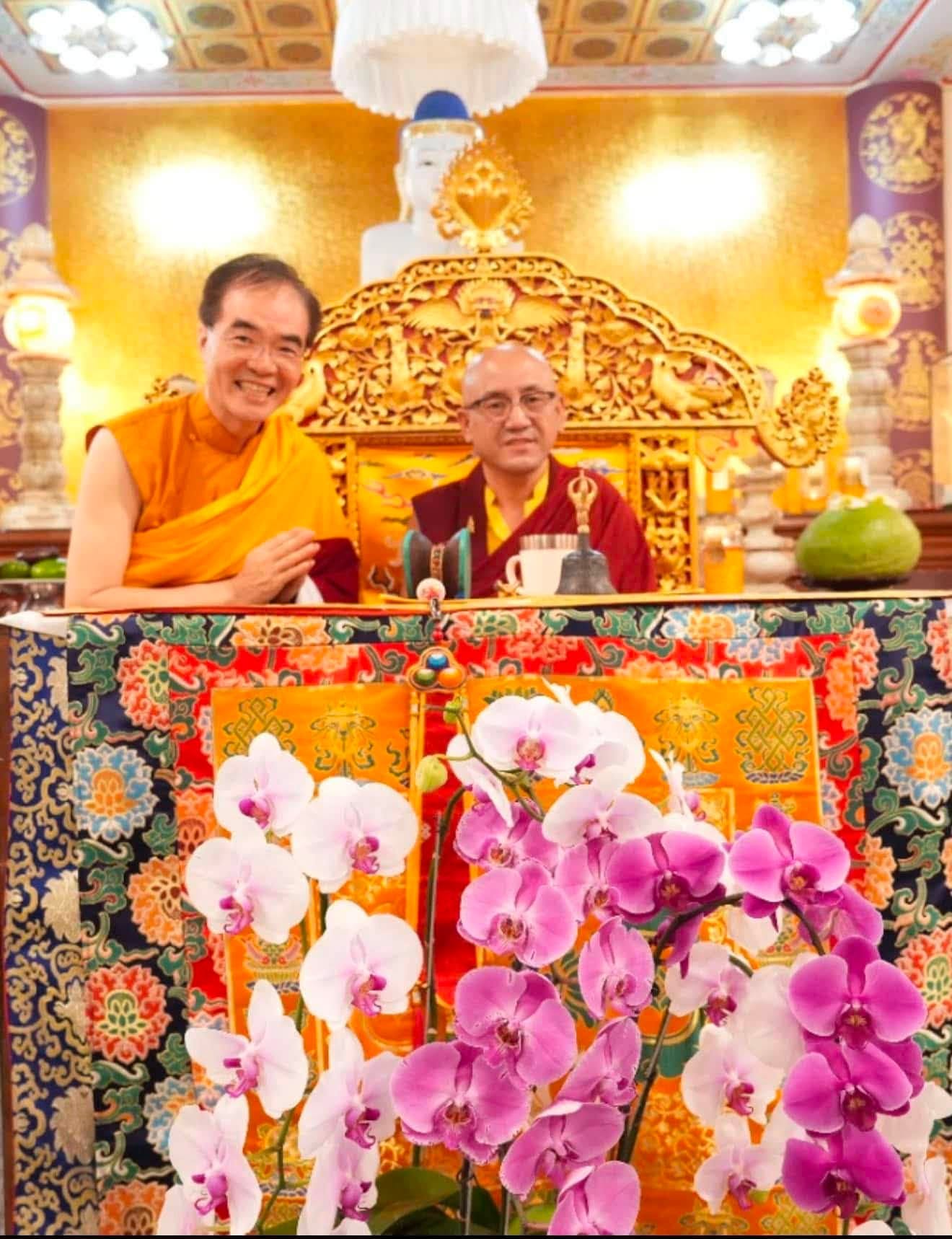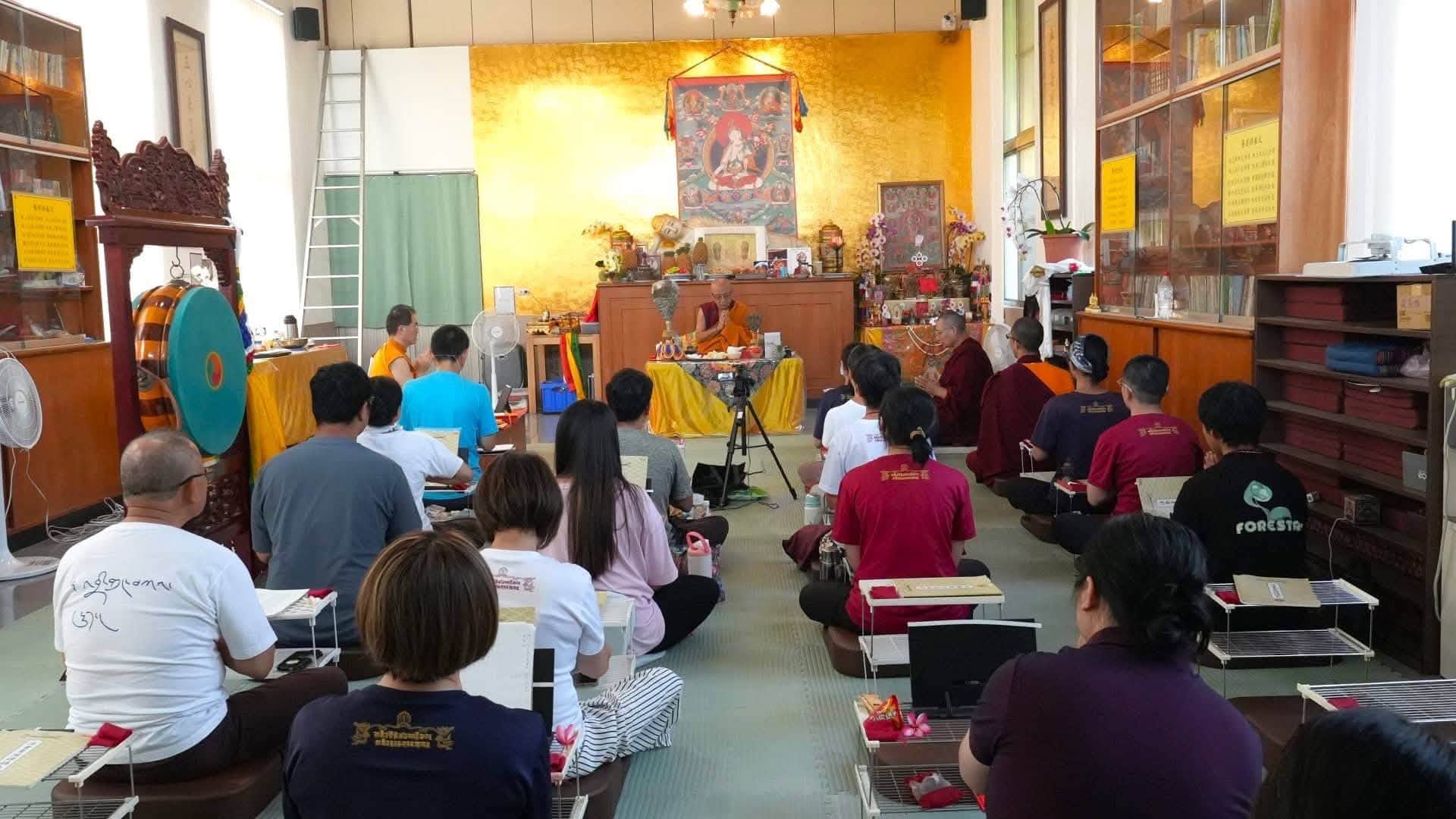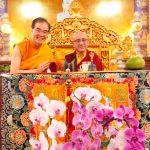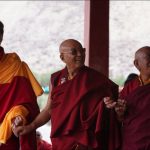
On May 31, 2026, coinciding with the auspicious Tibetan Buddhist festival of Saga Dawa, His Eminence the 7th Tritsab Rinpoche—a vital lineage master and Regent of the Drikung Kagyu order—graced the Pingtung Khyentse Shedrup Ling with his presence, accompanied by Lopon Tsering. His Eminence personally witnessed the graduation of the inaugural cohort of practitioners completing the “Five-Stage Practice Program of the Six Yogas of Naropa and Mahamudra.” Orchestrated by the Khyentse Enlightenment Mandala, this landmark event marked a significant chapter in the history of systematic Buddhist practice education conducted entirely in the Chinese language.
This milestone achievement came after six years of dedicated study, practice, and monastery construction, carrying profound lineage significance for the Buddhist community in southern Taiwan.
🔴Dr. Huang Ying-Chieh Champions Education and Practice in the Chinese Language
According to Khyentse Enlightenment Mandala, their vision for propagating the Dharma traces back to the late 19th century, when the 2nd Palme Khyentse Rinpoche made a sacred vow to benefit Chinese-speaking practitioners. Carrying forth this historical aspiration, the 3rd Palme Khyentse Rinpoche (Dr. Huang) has long dedicated himself to standardizing, systematizing, and structuring both Sutra and Tantra teachings of Tibetan Buddhism into Chinese. His goal is to enable Chinese-speaking practitioners to cultivate a deep understanding and engage in the practice of these precious lineage teachings within their native linguistic context.
In the past, traditional retreat practices were often out of reach for lay practitioners due to constraints in time, space, language, and living conditions. To address the needs of modern practitioners, Khyentse Rinpoche officially launched the “Six Yogas of Naropa and Five-Stage Mahamudra Program” in 2020, with the compassionate permission and support of His Holiness the Drikung Kyabgon Chetsang Rinpoche, and under the comprehensive guidance of the accomplished Yogi master Khenpo Konchog Tashi.
Designed primarily for modern Chinese speakers, the program’s most distinctive feature is that all systematic courses and practical training are conducted exclusively in Chinese. Since its launch, the program has attracted over 300 participants, becoming a rare and monumental long-term Vajrayana practice education project in the Chinese-speaking Buddhist world.
🔴Six Years of Unwavering Diligence Amidst the Pandemic and Construction Challenges
The six-year journey of this inaugural cohort was filled with challenges. Since the program’s inception in 2020, Khyentse Rinpoche has guided the students in progressively studying and practicing the teachings while simultaneously constructing the retreat center in southern Taiwan. Despite the disruptions of the global pandemic and various hardware and software installation challenges, the students remained steadfast in their diligence, completing each stage of the curriculum.
In 2024, as the students neared the completion of their third stage, His Holiness the Drikung Kyabgon Chetsang Rinpoche personally visited the center—which he had graciously named “Khyentse Shedrup Ling”—to perform the consecration ceremony, offering immense blessings and encouragement. The students continued their training through the final stages, culminating in this successful graduation during the holy month of Saga Dawa in 2026.
🔴H.E. Tritsab Rinpoche Awards Certificates, Commending the Practitioners’ Perseverance
On May 31, the fourfold assembly gathered to welcome Tritsab Rinpoche. Accompanied by traditional incense, precious parasols, and full monastic protocol, His Eminence entered the main hall amidst the majestic resonance of bells, drums, and Dharma instruments.
Tritsab Rinpoche personally conferred graduation certificates upon the first cohort of students who completed the five stages of practice, expressing his high praise and rejoicing. His Eminence compassionately encouraged the graduates to maintain their diligence without regression, promising to provide further spiritual guidance in the future.
For many practitioners, this was not merely a course completion, but the fulfillment of a multi-year spiritual commitment. Completing the five stages of practice under the witness of Regent Tritsab Rinpoche symbolizes a monumental step forward for Chinese-speaking practitioners on the path of Tibetan Buddhist cultivation.
Blessing the Retreatants and Sacred Architecture
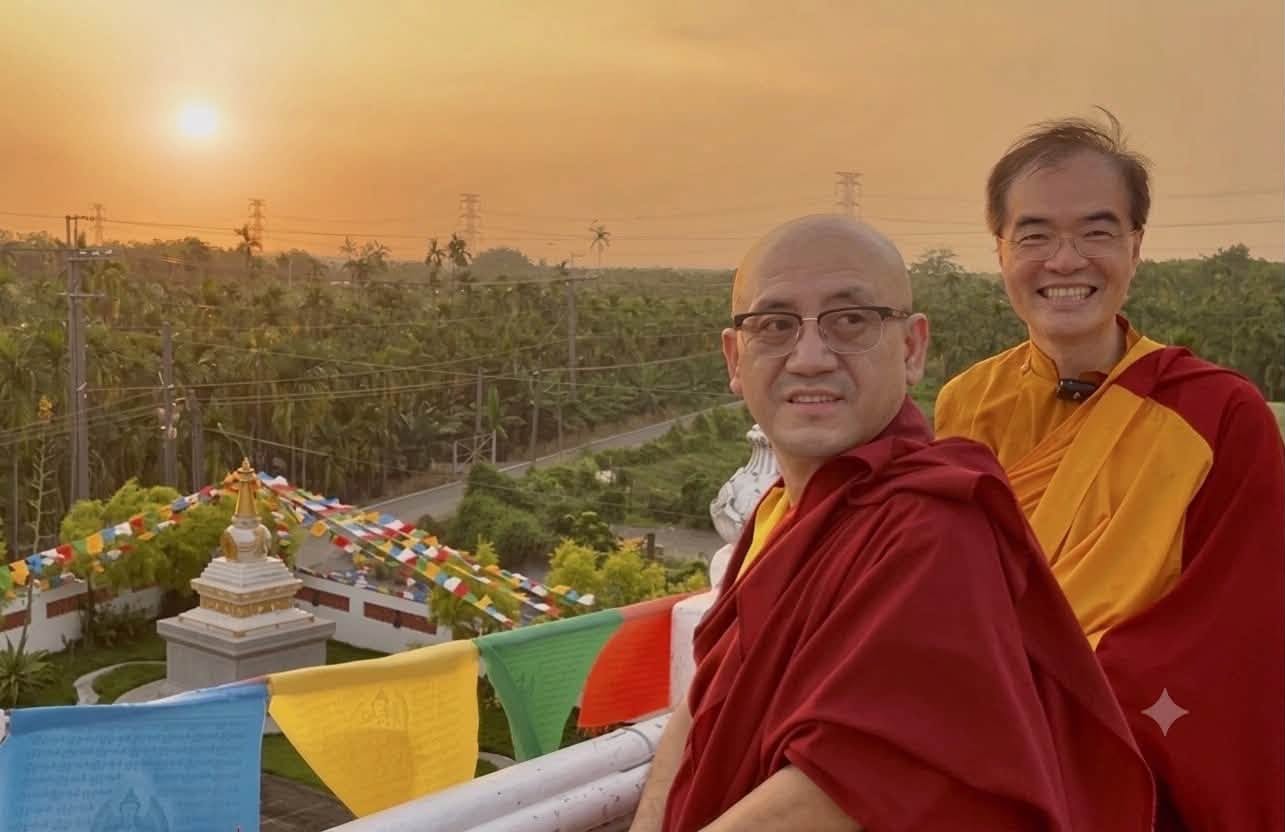
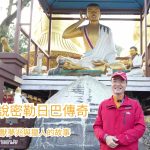
Following the certificate ceremony, Tritsab Rinpoche, accompanied by the monastic community and temple administrators, toured the grounds of Khyentse Shedrup Ling. He personally blessed the Rare Manjushri Yamantaka Protection Stupa, consecrated the windhorse prayer flags, and bestowed empowerments and pith instructions upon the retreat practitioners.
Tritsab Rinpoche expressed deep appreciation and praise for Palme Khyentse Rinpoche’s years of tireless effort in textual study, contemplation, meditation, the propagation of the Dharma, and the construction of the monastery, particularly praising his ability to integrate Tibetan Buddhist wisdom with modern language.
Gazing out over the twilight glowing across Khyentse Shedrup Ling, Khyentse Rinpoche reflected on his journey as a Taiwanese-born Tulku who carries the vital Palme Khyentse lineage: “To ensure that Tibetan Buddhism takes deep root in Taiwan through Chinese-language teaching—this is the mission of my life.”
🔴A Milestone of Spiritual Practice in Southern Taiwan
In his address, Palme Khyentse Rinpoche noted that his friendship with Tritsab Rinpoche spans over thirty years. The Regent’s visit is an immense validation of the monastery’s propagation and practice efforts over the past six years, serving as both a profound honor and a catalyst for future aspiration.
Khyentse Rinpoche emphasized that throughout his career translating numerous Tibetan texts and serving as the chief oral interpreter for major Dharma assemblies, he became convinced that teaching in Chinese is the only way to firmly root Tibetan Buddhism in Taiwan. Establishing Khyentse Shedrup Ling provides Chinese-speaking practitioners with a dedicated, authentic space for genuine practice—a core mission close to his heart.
The organizers also extended their deep gratitude to the Drikung Kagyu Open Eyes Buddhist Society (Drikung Kagyu Dharma Activation Association) for facilitating Tritsab Rinpoche’s auspicious visit to Taiwan, allowing the Buddhist community in southern part of the island to collectively witness this historic occasion.
【Profiles】
💎His Eminence the 7th Tritsab Rinpoche
His Eminence Tritsab Rinpoche is one of the primary leaders of the Drikung Kagyu lineage. Historical records indicate that the Tritsab incarnation line dates back to the second throne-holder of the Drikung Kagyu order. The previous incarnation served as Regent, playing a key role in recognizing and nurturing both His Holiness Chetsang Rinpoche and His Holiness Chungtsang Rinpoche.
The 7th Tritsab Rinpoche was born in India in 1981, recognized by H.H. Chetsang Rinpoche in 1986, and enthroned in 1990. He completed the traditional three-year retreat between 1996 and 1999. In 2001, the 37th Drikung Kyabgon Chetsang Rinpoche officially declared that Tritsab Rinpoche would oversee lineage affairs on his behalf, securing his pivotal status within the lineage.
💎The 3rd Palme Khyentse Rinpoche (Dr. Harrison Huang)
Born in Taipei, Taiwan in 1967, Palme Khyentse Rinpoche is a Han Chinese Tulku recognized by both H.H. the Drikung Kyabgon Chetsang Rinpoche and H.H. the 41st Sakya Trizin as the 3rd Palme Khyentse Rinpoche. Rinpoche holds a Bachelor’s degree in Sociology from Fu Jen Catholic University, a Master’s degree in Religious Studies from Hsuan Chuang University, and a Ph.D. in Buddhist Studies from the Graduate Institute of Oriental Humanities at Huafan University.
In his early years, he served extensively as a Chinese oral interpreter for countless Tibetan masters across both Sutra and Tantra, eventually being enthroned as an Acharya professor and Vajra Master. For decades, he has championed the localization and systematic progression of Tibetan Buddhism, creating structured courses taught entirely in Chinese.
🔺Read the full, exciting news report here:
https://more-news.tw/643664/